 how-to
Average Interior Painting Project Duration: Full Timeline
Table of Contents
- How Long an Average Interior Painting Project Takes
- How Long Does It Take to Paint a Room?
- Interior Painting Timeline by Home Size
- Interior Painting Preparation Checklist
- Interior Paint Drying Time Between Coats
- What Makes an Interior Painting Project Take Longer
- Frequently Asked Questions
Last Updated: October 15, 2026
How Long an Average Interior Painting Project Takes
The average interior painting project duration is three to five days for a typical home, though the exact timeline depends on size, prep work, and how many coats the walls need. A single room usually takes one to two days. A whole house can stretch to a week or more once you add trim, ceilings, and drying time between coats.
At Hardwood Floor Refinishing & Restoration, we have learned that the schedule matters as much as the finish. Homeowners want a clear answer before they move furniture or book a listing photo. This guide gives you that answer, plus the details most timelines skip.
Below, we break down the average interior painting project duration by room, by home size, and by crew, so you can plan with confidence. We also cover what slows a job down and how to keep yours on track.
How Long Does It Take to Paint a Room?
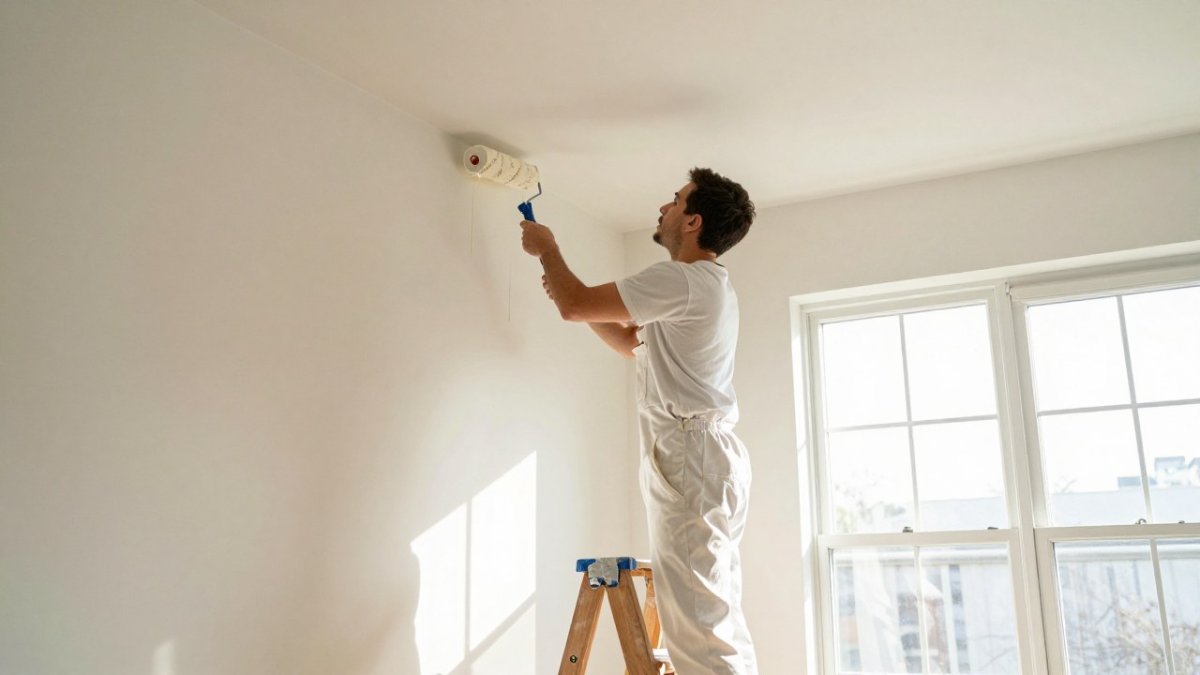
A standard room takes one to two days from start to finish, including prep and two coats of paint. The painting itself is fast. The prep and drying time are what fill the calendar.
Here is how the hours usually split for a single room:
- Prep and masking: 1 to 2 hours
- Cutting in edges and corners: 1 hour
- Rolling walls, first coat: 1 hour
- Dry time before recoating: 2 to 4 hours
- Rolling walls, second coat: 1 hour
- Cleanup and touch-ups: 1 hour
Room size changes the math. A small bedroom moves faster than a large living room with vaulted ceilings. High walls and stairwells add ladder time, which slows everything down.
Most guides treat a room as one block of time. It is not. It is a series of short tasks separated by drying windows. Plan around those windows and the day runs smoothly.
Interior Painting Timeline by Home Size
The bigger the home, the more the timeline depends on crew size, not just square footage. A 1,000 square foot home is a two to three day job for a two-person crew. A 1,500 square foot home runs three to four days. A 2,500 square foot home often takes five to seven days.
But those numbers mean nothing without a defined scope. Before you compare any estimate, ask what is included. A timeline that covers walls only will look shorter than one that includes ceilings, trim, closets, and repairs. Here is the scope behind the table below: normal prep (minor patching and sanding), two coats on walls, ceilings painted flat white, trim and baseboards painted with a brush and roller, closets painted inside and out, and full cleanup. If your project skips ceilings or trim, subtract roughly 20 to 30 percent from the duration. If it adds major wall repairs or a color change from dark to light, add a day.
| Home Size | Rooms (approx.) | Crew Size | Estimated Duration | Scope Assumptions |
|---|---|---|---|---|
| 1,000 sq ft | 4 to 5 | 2 painters | 2 to 3 days | Walls, ceilings, trim, closets, minor prep |
| 1,500 sq ft | 6 to 7 | 2 painters | 3 to 4 days | Walls, ceilings, trim, closets, minor prep |
| 2,000 sq ft | 8 to 9 | 3 painters | 4 to 5 days | Walls, ceilings, trim, closets, minor prep |
| 2,500 sq ft | 10 to 12 | 3 to 4 painters | 5 to 7 days | Walls, ceilings, trim, closets, minor prep |
These numbers assume standard ceiling height (8 to 9 feet), normal prep, and two coats. Add a day for heavy furniture moving, extensive wall repairs, or vaulted ceilings. A home with plaster walls instead of drywall can add another half-day because plaster requires a primer coat and longer drying windows.
Crew size is the biggest lever. A two-person crew on a 2,000 square foot home will take longer than a four-person crew. But more painters is not always faster: too many people in a room can slow down masking and cutting in. A common pattern is to use two painters for prep and trim, then add a third for rolling walls. If you need the job done fast, ask about adding painters for the rolling stage only.
To translate square footage into labor hours, use a simple rule of thumb: one painter can roll about 150 to 200 square feet of wall per hour after prep. A 2,000 square foot home with 8-foot ceilings has roughly 6,000 square feet of wall surface (including closets and hallways). At two coats, that is 12,000 square feet of rolling. Two painters working a 7-hour day can cover that in about 4 to 5 days, which matches the table. Use this math to sanity-check any estimate you receive.
Interior Painting Preparation Checklist
Prep is the part of the job that decides how long the whole project takes. A room with patched holes, sanded edges, and clean surfaces paints faster and looks better. Skipping prep adds days later when drips, peeling, and rough patches show through.
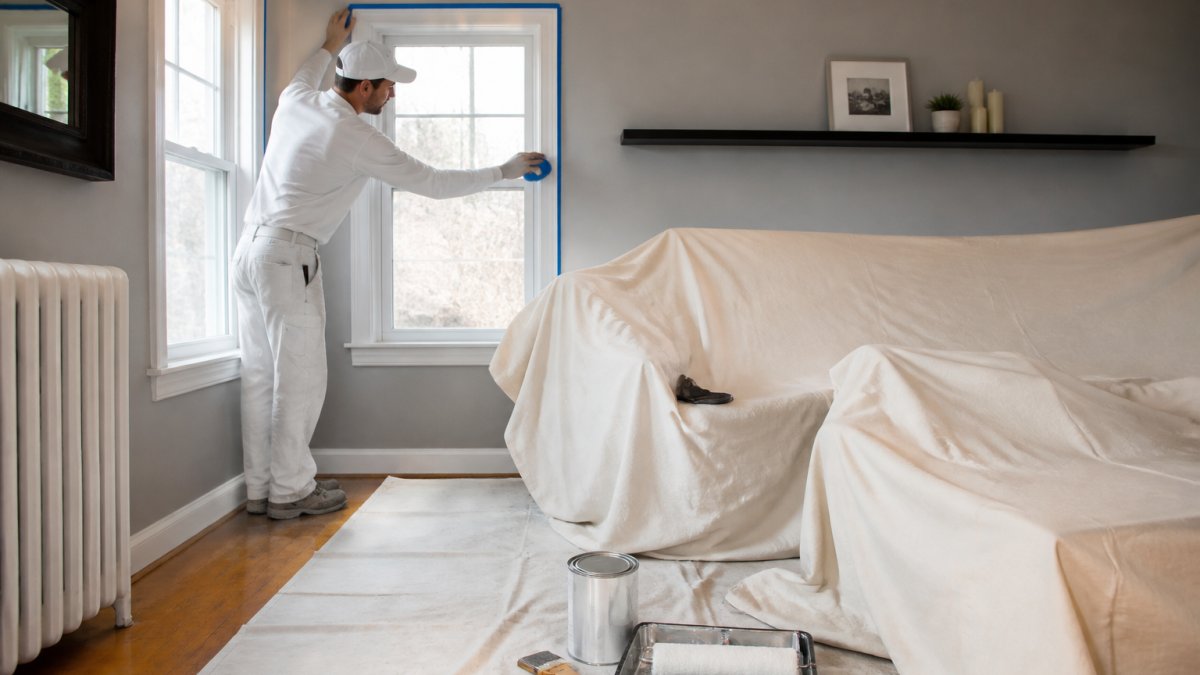
Here is the checklist we use before a brush touches the wall:
- Move furniture to the center of the room or out entirely
- Cover floors and furniture with drop cloths
- Remove outlet covers, switch plates, and hardware
- Patch nail holes, cracks, and dents
- Sand patched areas smooth
- Wipe down walls to remove dust and grease
- Tape trim, windows, and door frames
- Prime bare spots and stains
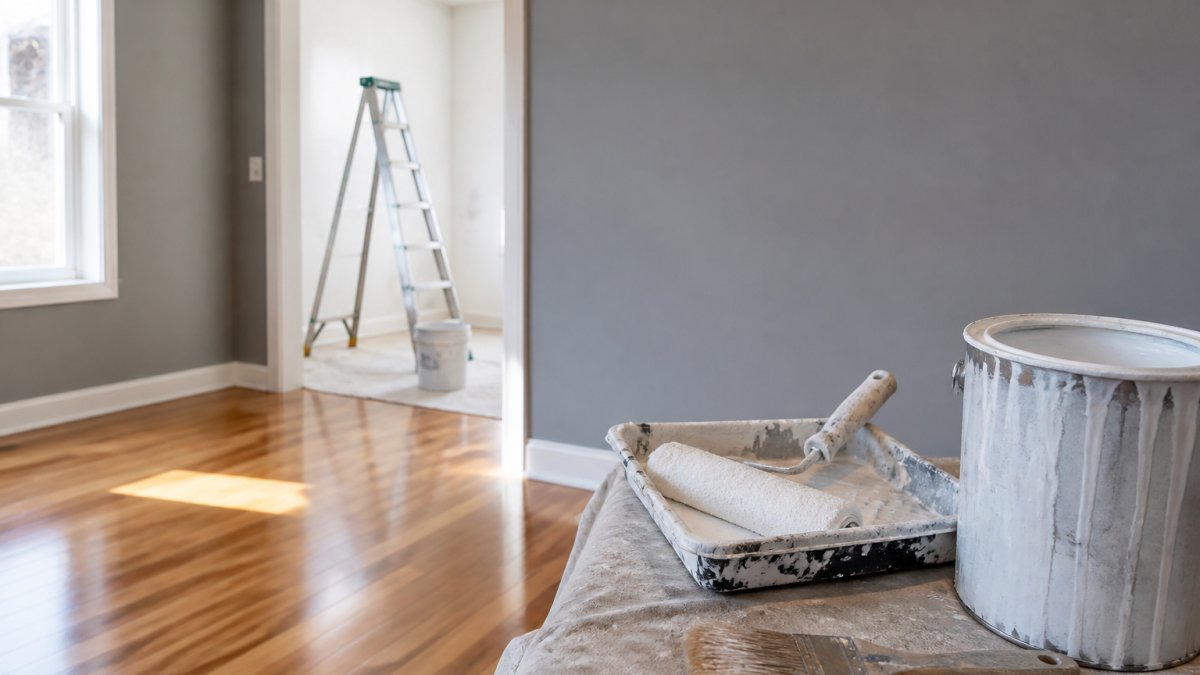
- Lay out paint, tools, and ladders
Prep usually takes one to two hours per room. Older homes with plaster walls take longer. Plaster soaks up paint differently than drywall, so it often needs a primer coat first.
Interior Paint Drying Time Between Coats
Drying time between coats is the biggest variable in any painting schedule. Most latex paints are ready for a second coat in two to four hours under ideal conditions: 70°F, 50 percent relative humidity, and good airflow. Oil-based paints take longer, often six to eight hours. Some fast-dry products allow recoating in about an hour.
But those are lab numbers. In a real home, drying time shifts with site conditions. Here is how each factor changes the clock:
- Temperature: Paint cures slower below 60°F. Most manufacturers recommend not painting below 50°F. In a cold room, add 1 to 2 hours per coat.
- Humidity: High moisture in the air slows evaporation. Above 70 percent relative humidity, latex paint may take 4 to 6 hours to recoat. A dehumidifier can help.
- Airflow: Open windows and fans speed things up. Stagnant air in a closed room can double drying time.
- Paint type: Water-based (latex) dries faster than oil-based. Alkyd and oil paints need 6 to 8 hours and sometimes overnight.
- Coat thickness: Thick coats stay wet longer. Spraying often lays down a thinner, faster-drying coat than rolling.
- Substrate: Porous surfaces like plaster and bare wood absorb moisture and dry faster on the surface but may need more time before recoating. Non-porous surfaces like glossy trim take longer.
Always check the manufacturer's recoat guidance on the can or technical data sheet. That is the only reliable source for your specific product. For example, a common interior latex might say "recoat after 2 hours," but that assumes 77°F and 50 percent humidity. If your room is 65°F and humid, wait 4 hours.
If you are on a tight timeline, ask your painter about fast-dry products. They can shave hours off each coat without cutting quality. But even with fast-dry paint, you cannot skip the recoat window. A practical schedule for a single room with two coats: prep and first coat on day one, second coat on day two after a 4-hour dry, then cleanup and touch-ups. That is why most rooms take one to two days even when the painting itself is only a few hours.
For whole-home projects, drying time compounds. If you have 10 rooms and each needs a 4-hour recoat window, you cannot paint them all in one pass. Crews often work in zones: paint the first coat in three rooms, then move to the next three while the first three dry, then circle back for the second coat. This zoning keeps the crew productive and respects the drying clock. Ask your painter how they plan to sequence the work around drying windows.
What Makes an Interior Painting Project Take Longer
Several factors push a painting project past its estimate. Knowing them helps you plan and avoid surprises. The most common ones are heavy prep work, extra coats, and access problems.
Here is what tends to add time:
- Wall repairs: Large holes, cracks, or water damage need patching and drying.
- Extra coats: Dark colors over light walls often need three coats.
- Color changes: Switching from a deep color to white takes more coverage.
- Ceilings and trim: These add detail work and ladder time.
- Occupied homes: Furniture and daily life slow the crew down.
- Old or uneven surfaces: Plaster, texture, and paneling take longer to prep.
Crew size matters too. A two-person crew on a 2,000 square foot home will take longer than a four-person crew. If you need the job done fast, ask about adding painters.
One more thing: moisture and site conditions change drying and recoat time. A humid week can add a full day to any schedule. Good painters build that buffer into the plan.
At Hardwood Floor Refinishing & Restoration, we give free in-home estimates and honest timelines. We also refinish hardwood floors, so if your project includes both painting and floor work, we can schedule them together and save you time.
Frequently Asked Questions
How long does it take to paint a 1,000-square-foot house interior?
A 1,000-square-foot home usually takes two to three days for walls and ceilings with a two-person crew, assuming normal prep and two coats. Add a day for trim and doors. If the home is occupied and furniture has to be moved and covered each morning, add another half day. Heavier prep, like patching cracks or sanding glossy surfaces, pushes the total closer to four days.
How much time should you allow between coats of interior paint?
Most interior paints need two to four hours before recoating, but that window shifts with humidity, airflow, and the product itself. Water-based paints on a dry, ventilated day may be ready in two hours. Oil-based paints and humid rooms can need six to eight hours. Read the label on your specific can, because recoat time is set by the manufacturer, not by a general rule.
What factors can make an interior painting project take longer?
The biggest ones are surface preparation, color changes, and access. Patching nail holes, sanding, and priming bare spots can add a full day on their own. Going from a dark wall color to white usually needs an extra coat. High ceilings, stairwells, and rooms packed with furniture slow every step. Older homes with uneven plaster or previous bad patches also add time.
How long should you wait before moving furniture back after painting?
Wait at least 24 hours before sliding furniture back against a freshly painted wall, and longer in humid weather. Paint that feels dry to the touch can still be soft underneath, and pressing a dresser or bookcase against it can leave marks or peel the finish. Give trim and doors a full day, then handle them gently for the first week.
Planning a paint or floor project around a move, a sale, or a new tenant is stressful. You need a crew that shows up on time and sticks to the schedule. Hardwood Floor Refinishing & Restoration offers free in-home estimates, dependable scheduling, and clean job sites, plus interior painting and full hardwood floor refinishing under one roof. Get started with Hardwood Floor Refinishing & Restoration and get a clear timeline before the work begins.