 how-to
How Do You Choose a Hardwood Floor Stain?
Last Updated: October 30, 2026
Quick Summary
To choose a hardwood floor stain, identify your wood species, grain, and existing color first, since these decide what a stain can do. Test three to five candidate colors on a sanded patch of your actual floor, then apply your planned finish before judging.
- Oak takes stain evenly, while pine can blotch and maple resists color.
- Test stain on a sanded patch of your own floor, never a paper swatch.
- Limit samples to three to five colors so differences stay clear.
- Medium browns with matte or satin finishes hide scratches and paw prints best.
- Apply your intended finish over each sample, since finish shifts the color.
Table of Contents
- Start With Your Wood, Not the Color Chart
- How to Test Hardwood Floor Stain Samples on Your Actual Floor
- Hardwood Floor Stain by Wood Species: What Oak, Pine, and Maple Do to Color
- Light vs Dark Hardwood Floor Stain: Undertones, Lighting, and Resale
- The Best Hardwood Floor Stain for Pets and Busy Households
- How Finish and Sheen Change the Stain You Picked
- Book a Free In-Home Stain Consultation
- Frequently Asked Questions
Start With Your Wood, Not the Color Chart
Most homeowners open a stain fan deck and pick a color they like. That is the wrong first move, and it is why so many stain jobs end in disappointment. Learning how to choose hardwood floor stain starts with identifying your wood species, its grain, and its existing color, because those three things decide what a stain can actually do.
A hardwood floor stain is a pigmented liquid that soaks into sanded wood to shift its color while letting the grain show through. It is not paint. It cannot hide what is underneath.
A practical order to follow when choosing a stain:
- Identify the species and grain pattern
- Check whether the floor is raw or has an existing finish
- Note the room's light and the home's style
- Test samples on the actual floor
- Choose the finish and sheen last
Skip step one and you are guessing. Oak takes stain evenly. Pine can blotch. Maple resists color, so the same stain can give three different results.
If you are unsure whether your floor even needs refinishing, check the signs of wear before you pick up a color chart.
How to Test Hardwood Floor Stain Samples on Your Actual Floor
Never choose a hardwood floor stain from a paper swatch or a photo online. Test it on your own floor, in your own light, on a sanded patch. Stain reacts to the wood's grain, age, and porosity, and no sample board can copy that.
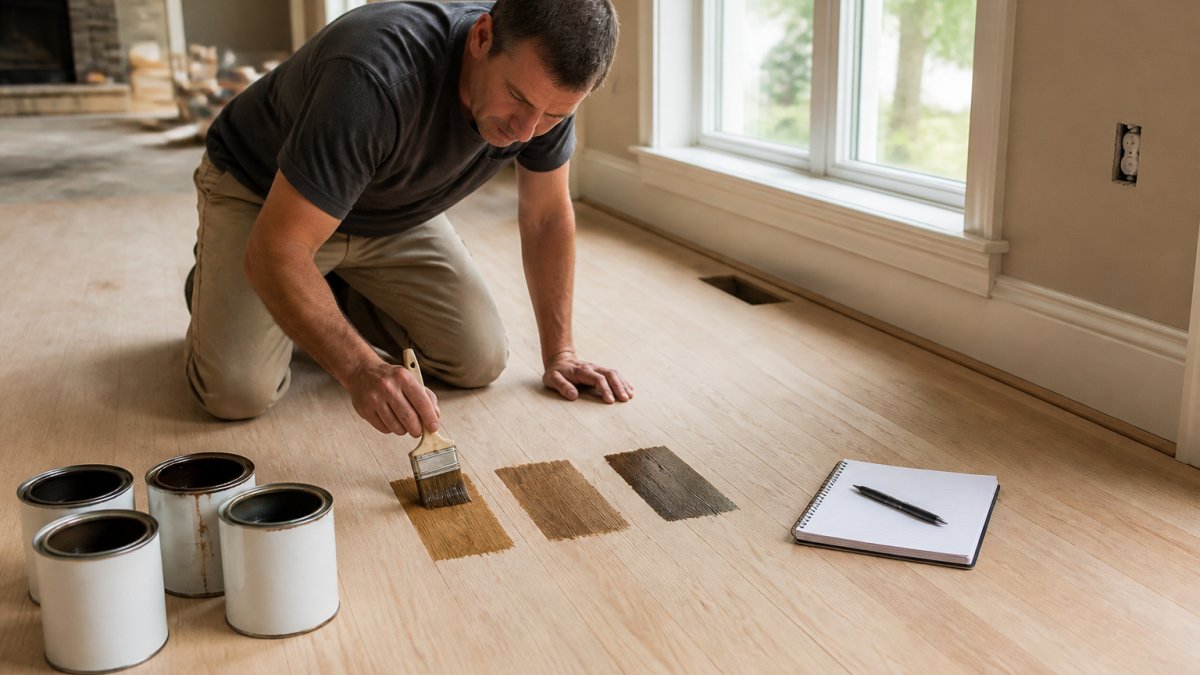
A repeatable sample-testing process looks like this:
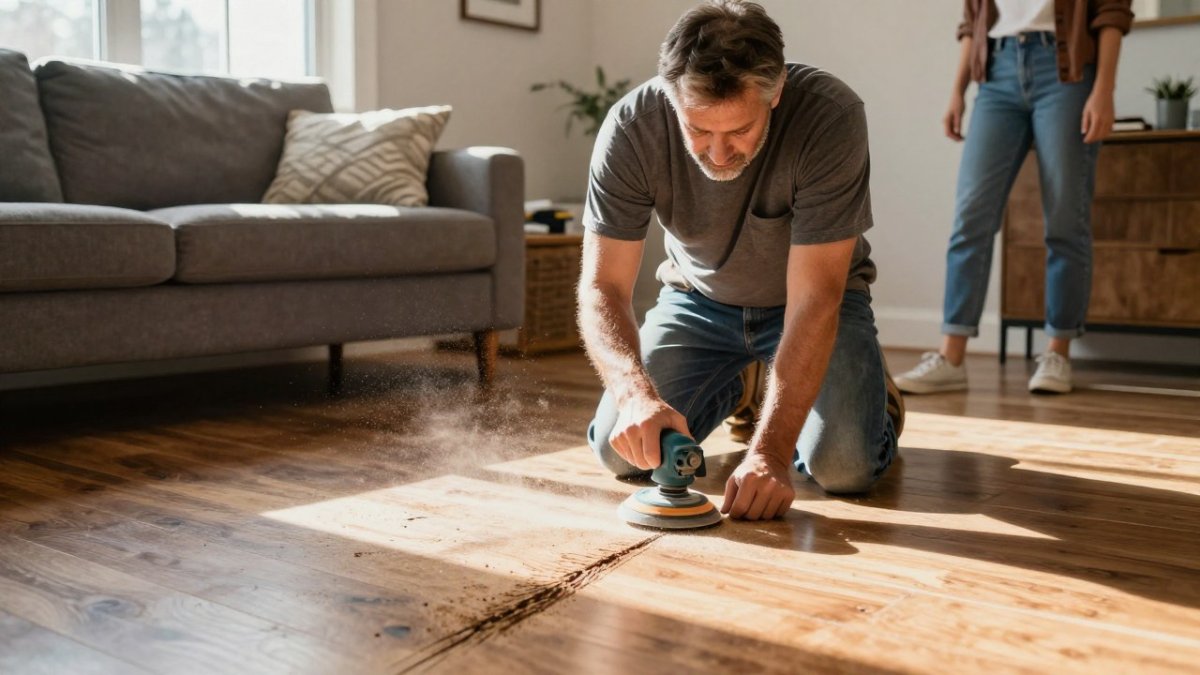
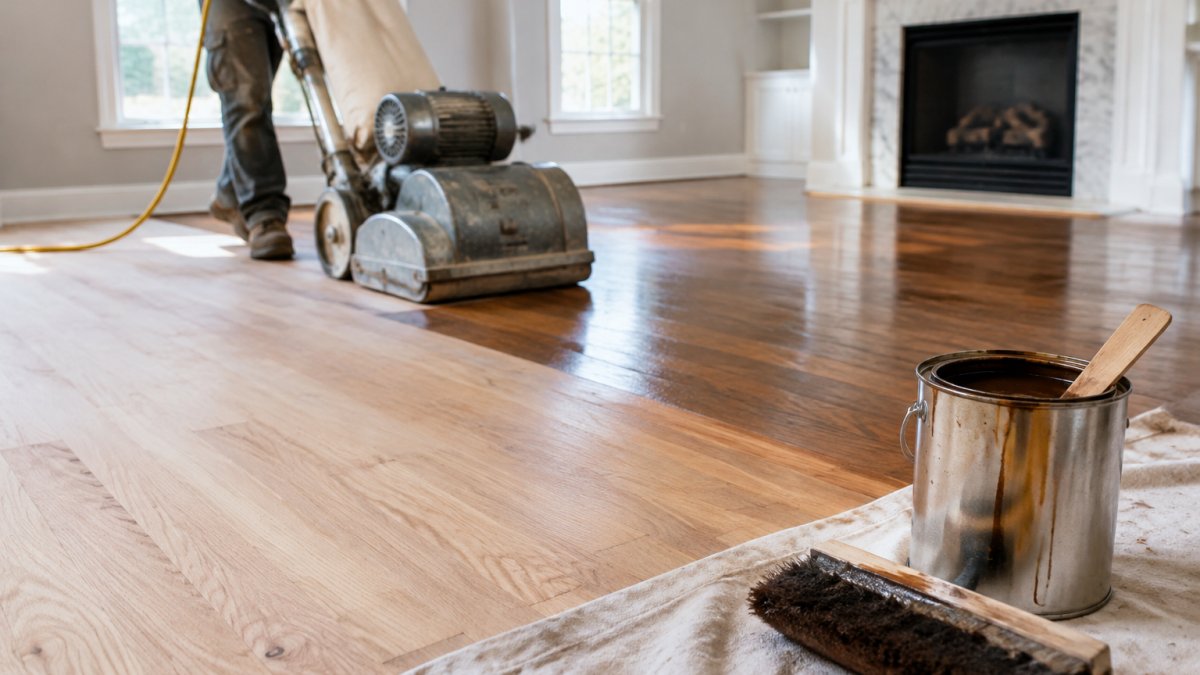
- Sand a test area to bare wood in a spot that will be covered later, like under a rug or inside a closet. The patch should be large enough to show the grain pattern, roughly the size of a floor tile or larger.
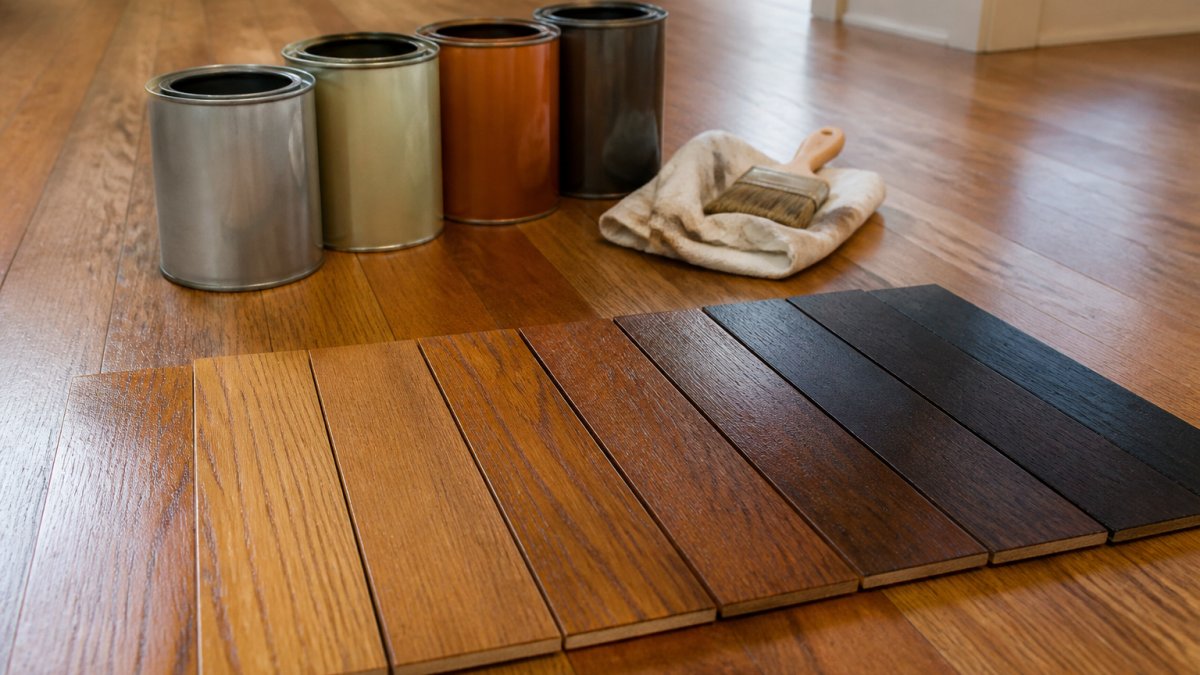
- Limit yourself to three to five candidates. More than that and the differences blur. Pick a light, a medium, and a dark option, plus any wildcard you are curious about.
- Apply the stain exactly as the can directs, including any pre-stain conditioner the species requires. Use the same number of coats for every sample so the comparison is fair.
- Let each sample dry fully before judging color. Stain looks darker and richer when wet; the true tone emerges after the recommended dry time.
- Apply the finish coat you plan to use over at least one sample of each color. Finish changes how the stain reads, and judging bare stain is misleading.
- Label each patch with tape so you do not lose track.
- Evaluate at three times of day: morning, afternoon, and evening under artificial light. Note how the color shifts and whether it feels warmer or cooler in each condition.
- Compare samples side by side, never one at a time from memory. Stand back several feet and look at them together, then crouch down to see them at floor level.
Watch out: testing on a scrap board instead of the floor is the most common mistake we see. The same stain on a fresh piece of oak can look two shades lighter than it will on your fifty-year-old floor. Also avoid judging samples under a single light source; a stain that looks perfect under midday sun can turn muddy under evening lamps.
Hardwood Floor Stain by Wood Species: What Oak, Pine, and Maple Do to Color
Wood species decides how much color the stain delivers and how evenly it lands. Oak, pine, and maple are the three most common floors in older homes, and each one behaves differently.
Oak is the most forgiving. Its open grain drinks stain evenly, so light, medium, and dark tones all read true. Red oak pulls warm and can turn orange under some stains. White oak stays cooler and more neutral.
Pine is the tricky one. Its soft, resinous grain soaks up stain in patches, which is why pine floors often look blotchy after a dark stain. A pre-stain conditioner helps, and lighter tones hide unevenness better.
Maple is dense and closed-grain. It resists stain, so dark colors come out muddy and uneven. Many pros recommend a natural or very light tone on maple.
Each common floor species takes stain differently, so match your color choice to the wood you actually have.
| Species | How it takes stain | What to watch for |
|---|---|---|
| Oak | Open grain drinks stain evenly; light, medium, dark read true | Red oak pulls warm and can turn orange; white oak stays cooler |
| Pine | Soft, resinous grain soaks stain in patches | Blotchy under dark stain; use pre-stain conditioner, lighter tones |
| Maple | Dense, closed grain resists stain | Dark colors come out muddy and uneven; natural or very light tones |
Light vs Dark Hardwood Floor Stain: Undertones, Lighting, and Resale
The light-versus-dark hardwood floor stain decision comes down to three things: undertone, light, and how the room will be used. Get the undertone wrong and the floor fights everything else in the room.
Undertones are the color hiding inside the color:
- Warm tones lean red, orange, or yellow. They suit traditional homes and pair with wood furniture.
- Cool tones lean gray or green. They read modern and work with gray and white palettes.
- Neutral tones sit in the middle and are the safest bet for resale.
Light stains make a small room feel bigger and show dust less. Dark stains add richness and formality but show every scratch and speck of dust. For resale, medium brown and neutral tones appeal to the widest range of buyers.
Room lighting changes everything. A stain that looks rich in a bright south-facing room can look flat and dark in a north-facing one. Always judge your samples in the room where they will live.
The Best Hardwood Floor Stain for Pets and Busy Households
For homes with dogs, cats, and kids, the best hardwood floor stain is a medium tone with a matte or satin finish. Medium browns hide scratches and paw prints far better than very dark or very light floors, and a lower sheen keeps wear from catching the light.
What actually matters for busy households:
- Mid-range browns camouflage scratches and dirt between cleanings
- Matte and satin finishes hide scuffs that glossy finishes magnify
- Grain-forward species like oak distract the eye from daily wear
- Water-based finishes cure faster and stand up to cleaning
A common mistake is choosing a near-black stain for a house with a big dog. It looks stunning on day one. Six months of nails and toys later, every mark shows.
How Finish and Sheen Change the Stain You Picked
The finish on top of your stain changes how the color reads. The same stain under a glossy finish looks deeper and more saturated. Under a matte finish, it looks softer and more natural. This is not a minor detail: it is the difference between the floor you picked and the floor you get.
Sheen is the amount of shine on the finished floor. Gloss reflects the most light and makes color pop, but it shows dust and scratches. Satin sits in the middle and is our usual recommendation for family homes. Matte has almost no shine and hides wear best, though it can look flat in dark rooms.
Finish type matters too. Oil-based finishes warm the color slightly as they age, adding a honey tone over time. Water-based finishes stay clearer and truer to the stain you chose. If you love the exact color on your sample, a water-based finish keeps it closest.
What most guides miss is how to judge a sample with the finish in mind. A bare stain sample is only part of the picture. Apply the finish you intend to use over at least one sample of each candidate color, let it cure per the manufacturer's directions, and then compare. The finish coat can shift a stain by a visible step, especially with oil-based products that amber over time.
A practical approach is to test your top two or three colors under both a matte and a satin finish if you are undecided on sheen. The color that holds up under both is usually the safer choice. If you are working with a flooring professional, ask which finish system they use and whether they can show you a finished sample on your own wood before you commit.
Book a Free In-Home Stain Consultation
Choosing a stain is a decision best made on your floor, with an experienced eye beside you. Our team has refinished hardwood floors on the North Shore, and we bring stain samples, species knowledge, and honest advice to your door.
Our free in-home estimates are a good way to get expert input on your floor before you commit.
We are locally owned. If you are comparing companies, our tips for hiring professional floor contractors can help you vet whoever you choose. You can see our hardwood flooring and refinishing services or request a free estimate.
Frequently Asked Questions
How do I choose a stain color for hardwood floors?
Start with the wood itself: identify the species and its natural undertone, then pick two or three candidate colors in the light, medium, or dark range. Test each one on a sanded patch of your actual floor, view the patches in morning, afternoon, and evening light, and compare them against your cabinets, trim, and furniture. The color that stays pleasing in every light and matches your fixed finishes is the one to choose.
How can I test hardwood floor stain colors before choosing one?
Ask for sample patches applied to your own floor after sanding, not just paper cards or store samples. Apply each color in a small square, let it dry fully, and compare them side by side under natural light and your room lighting. Check the patches at different times of day, and note how the grain absorbs the color. Testing directly on the floor shows the true result because wood species and grain change how a stain reads.
Does the type of wood affect how hardwood floor stain looks?
Yes, significantly. Oak takes stain evenly and is the most predictable. Pine absorbs unevenly and can turn blotchy or orange, so lighter colors usually work better. Maple and birch resist stain penetration and may look muddy in dark colors. Older floors also have age-related color shifts. Testing on your actual wood is the only reliable way to predict the final result.
What hardwood floor stain colors are easiest to maintain?
Medium tones hide dust, scratches, and pet hair better than very dark or very light floors. Dark stains show every scratch, footprint, and speck of dust, while very light natural finishes show dirt and wear at the edges. A medium brown or warm neutral with a satin finish tends to look cleaner longer and is more forgiving in busy households with pets.
Picking a stain color is the easy part. Getting a floor that looks right in every light, holds up to daily life, and matches your home takes a trained eye and a proper test on your own wood. That is where we come in. Hardwood Floor Refinishing & Restoration offers free in-home estimates, careful preparation, dependable scheduling, and clean job sites, backed by more than a decade of local work. Get started with Hardwood Floor Refinishing & Restoration and choose your stain with confidence.