 blog
How to Choose Expert Flooring Restoration Services
Last Updated: November 4, 2026
Quick Summary
Expert flooring restoration in Essex County covers three jobs: sanding, refinishing, and targeted repair. Repair fixes cracked boards, water damage, or gaps before sanding starts, and skipping it means you sand a floor that still squeaks or shows water rings through new finish.
- Ask for liability insurance and workers' comp certificates, then confirm the policy is current with the insurer.
- Get a written scope naming the finish brand, number of coats, and what is excluded.
- Buff and recoat when finish is dull but wood is sound; deep scratches and peeling need sanding.
- Floor condition, finish type, prep, access, and stairs all affect the cost of the job.
- Hardwood Floor Refinishing & Restoration has served the North Shore since 2012 and offers free in-home estimates.
Table of Contents
- What Expert Flooring Restoration Services Actually Include
- How to Vet a Flooring Contractor Before You Hire
- The Real Hardwood Floor Refinishing Timeline
- Hardwood Floor Repair Essex County Homeowners Need Most
- When to Buff and Recoat Hardwood Floors Instead of Sanding
- Oil-Based vs. Water-Based Floor Finish: Which Lasts Longer
- What Drives the Cost of Floor Restoration
- Book a Free In-Home Floor Assessment
- Frequently Asked Questions
What Expert Flooring Restoration Services Actually Include
Expert flooring restoration services Essex County homeowners hire typically cover three jobs: sanding, refinishing, and targeted repair. At Hardwood Floor Refinishing & Restoration, we have handled all three across the North Shore since 2012. The right method depends on the actual condition of the floor.
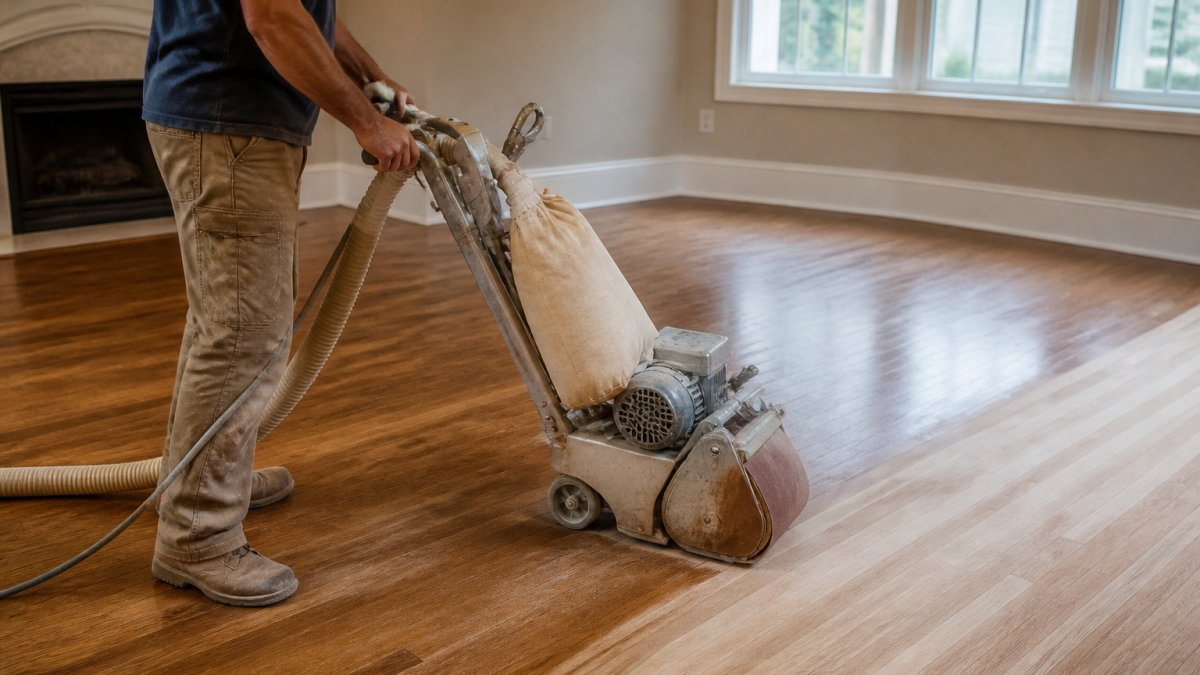
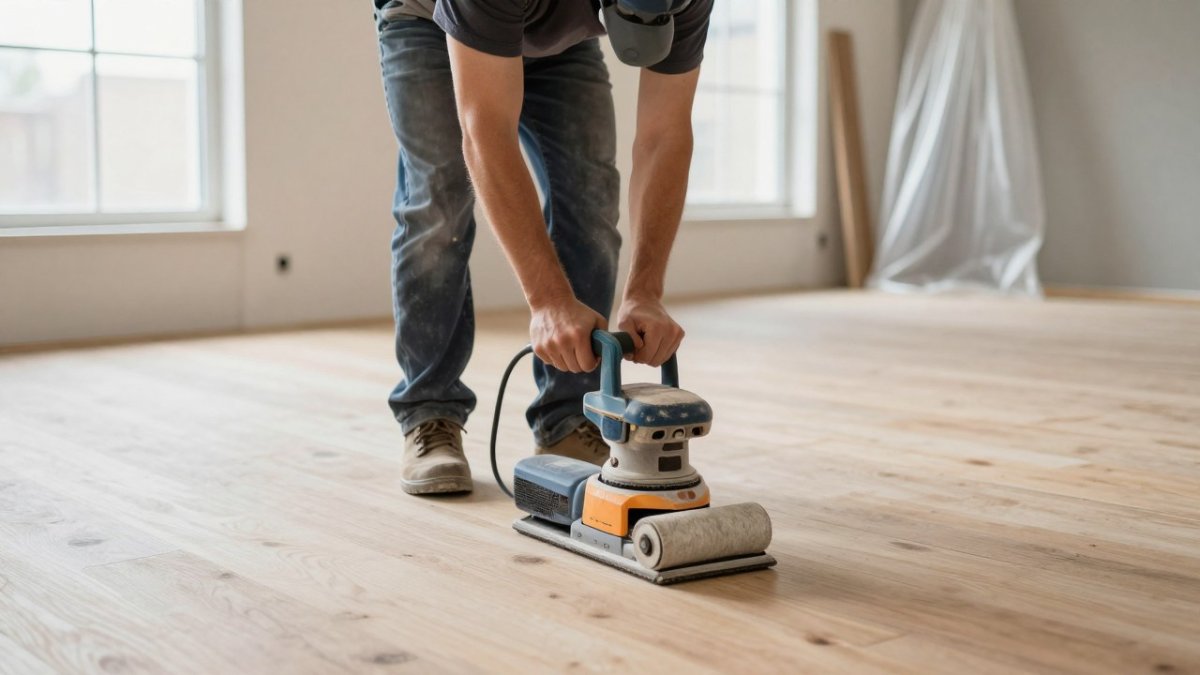
Here is the short version. Floor sanding removes the top layer of wood to eliminate scratches, stains, and surface wear. Refinishing means applying a new finish after sanding, whether clear or stained. Repair fixes structural problems first, like cracked boards, water damage, or crumbling edges, before any sanding starts.
Skip the repair step and you will sand a floor that still squeaks, dips, or shows dark water rings through brand-new finish. That is the most common mistake we see when homeowners try to shortcut the process.
Sanding, Refinishing, and Repair Compared
| Service | What It Fixes | When You Need It |
|---|---|---|
| Sanding | Surface scratches, worn finish, stains | Finish is dull or scratched but wood is sound |
| Refinishing | Color, sheen, protection | After sanding, or when you want a new look |
| Repair | Cracked boards, water damage, gaps | Damage reaches below the surface |
How to Vet a Flooring Contractor Before You Hire
Ask for proof before you ask for a quote. A flooring contractor who cannot produce insurance certificates, a written scope, and local references is a risk you do not need to take. Treat the vetting conversation as a test, because the contractor who answers it well is more likely to run the job well too.
Start with insurance. Ask for a certificate of liability insurance and proof of workers' compensation coverage, and confirm the policy is current by calling the insurer's number on the certificate. If a crew member is injured on your property and the contractor has no workers' comp, the claim can land on your homeowner's policy.
Next, ask about licensing and credentials. Requirements vary by state and locality, so ask what license or registration the contractor holds and how to verify it with the issuing agency. A contractor who hesitates on this question is telling you something.
Get a written scope that names the finish brand and number of coats, the repair items included, and what is excluded. Vague scopes are where change orders are born. Ask who performs the work, employees or subcontractors, and whether the same crew that quotes the job will run it.
Ask for references from local residential clients you can actually call, and ask those references how the contractor handled problems, not just how the floors look. Then ask about the warranty: what it covers, how long it lasts, whether it is prorated, and whether it transfers if you sell the home. Get the warranty terms in writing before work begins.
- Confirm liability insurance and workers' comp coverage in writing
- Verify the license or registration with the issuing agency
- Ask for references from local residential clients you can actually call
- Get a written scope that names the finish brand and number of coats
- Ask who performs the work, employees or subcontractors
- Confirm the start date and expected duration in writing
- Ask how dust is controlled and who handles cleanup
- Check that the contract covers surprise damage found mid-job
- Get warranty terms in writing, including duration and transferability
For a deeper walkthrough of these steps, see our guide to hiring professional floor contractors. The one question most people forget: what happens if the sander uncovers subfloor damage? Get that answer in writing before anyone touches your floors.
The Real Hardwood Floor Refinishing Timeline
The refinishing timeline depends on the size of the home, the finish, and conditions in the house. Occupancy and humidity can shift the schedule, so ask for a written timeline during your estimate.
Neither finish is "better" in the abstract; the timeline you can live with often decides which one suits your home.
Scheduling Around Move-In and Listing Dates
Book the work before the furniture arrives, not after. If you are listing a home or moving in, talk with your contractor about scheduling so the floors are finished and protected before photography or before boxes come through the door.
Hardwood Floor Repair Essex County Homeowners Need Most
Older North Shore homes often show scratched boards, water-stained sections, cracked board edges, squeaks, and gaps. Many of these issues can be repaired without replacing the whole floor.
Not sure whether your floor has crossed the line from worn to damaged? Our guide to the signs your hardwood floor needs refinishing walks through the warning signs in plain terms. As a general guide, a stain that disappears when a test patch is sanded is usually surface-level.
When to Buff and Recoat Hardwood Floors Instead of Sanding
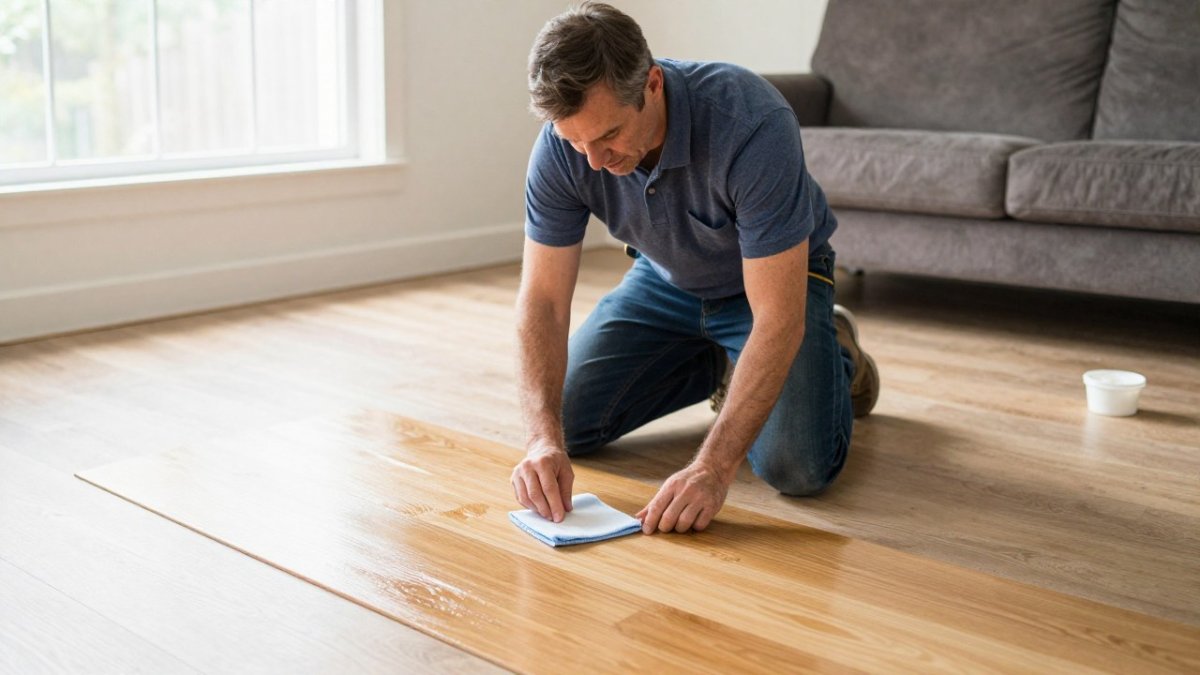
Buff and recoat hardwood floors when the finish is dull or lightly scratched but the wood underneath is still sound. A buff and recoat scuffs the existing finish and applies a fresh topcoat, which can restore sheen without removing wood.
It will not fix deep scratches, stains that have soaked into the wood, or a finish that is peeling. Those need sanding. Watch out: recoating over a contaminated or waxed surface causes the new coat to flake within months, so the prep step is not optional.
Oil-Based vs. Water-Based Floor Finish: Which Lasts Longer
Oil-based and water-based floor finishes each have different characteristics, including drying time, color, and odor. Both can be durable when applied correctly.
Oil-based finishes generally take longer to cure and can yellow slightly with age, which may shift the color of light woods. If you are also choosing a stain, our guide on how to choose a hardwood floor stain covers how finish and stain interact.
What Drives the Cost of Floor Restoration
Most flooring pages stop at "call for a quote." That leaves you unable to sanity-check an estimate. Here is what actually moves the number, so you can compare bids apples to apples.
Square footage is one factor in cost, and setup, sanding, and finish prep are spread across the area being done. Ask each contractor how their pricing scales with the size of the job.
Floor condition is another factor. Floors with cupped boards, water stains that reach the subfloor, or widespread gaps typically need more repair work before sanding can begin.
Finish type matters too. The finish type and the number of coats can both affect the total job, since more material and drying time are involved.
Prep and access add hidden cost. Moving furniture, protecting cabinets, and working around tight staircases or occupied rooms all take time. Stairs take extra time to sand and finish, so ask how your contractor prices them.
A reliable estimate generally starts with someone walking the floor and checking underneath the surface. Ask each bidder to itemize square footage, repair scope, finish brand and coat count, and stair charges so you can see where the money goes.
Book a Free In-Home Floor Assessment
The fastest way to know what your floors need is to have someone look at them. Hardwood Floor Refinishing & Restoration offers free in-home estimates. You can contact us to schedule a free in-home assessment, or browse our hardwood flooring services to see exactly what we handle.
Frequently Asked Questions
How much does it cost to have floors professionally refinished?
There is no single figure, because price depends on square footage, how much repair the boards need, the finish you choose, and how many coats go down. A room with worn but intact boards costs far less than one with water damage and cupping. Ask for an itemized written estimate that separates sanding, repairs, staining, and finish coats so you can see exactly where the money goes. A free in-home estimate from Hardwood Floor Refinishing & Restoration can give you a clearer picture than an estimate by phone.
Can you refinish 100-year-old hardwood floors?
Usually yes, and older floors often have thicker wear layers than modern engineered boards, which gives them more room to be sanded. The deciding factor is how much wood sits above the tongue and groove. A careful contractor will check board thickness and any previous sanding before quoting. Floors that have been sanded repeatedly or are badly cupped may need board replacement in spots rather than a full refinish.
What is the difference between buffing and recoating hardwood floors?
A buff and recoat skips sanding down to bare wood. The contractor scuffs the existing finish, cleans the surface, and applies a fresh coat or two of finish on top. It fixes dullness, light surface scratches, and worn traffic lanes. It cannot remove deep scratches, stains that have soaked into the wood, or peeling finish. When the damage sits in the wood rather than the topcoat, sanding and refinishing is generally needed.
How long should you stay off hardwood floors after refinishing?
It depends on the finish. Water-based finishes typically allow light foot traffic within about 24 hours and furniture placement after a few days. Oil-based finishes cure slower, so most contractors ask for 24 hours before walking and several days before moving furniture back. Full cure takes longer than dry time, so keep heavy items off and avoid wet mopping for the first week. Ask your contractor for a written schedule tied to the specific product used.
Your floors have a story, and worn finish does not have to be the ending. Hardwood Floor Refinishing & Restoration brings locally owned craftsmanship, dependable scheduling, and clear communication to every project, from a single-room buff and recoat to full-home sanding and custom staining. Get started with Hardwood Floor Refinishing & Restoration and see your original hardwood floors brought back to life.