 how-to
What to Expect From Professional Painters: 2026 Guide
Table of Contents
- What to Expect From Professional Painters: A Step-by-Step Guide
- How to Prepare Your Home for Painters
- Do Painters Wash Walls Before Painting?
- What to Ask a Painting Contractor Before Work Begins
- Painting Project Final Walkthrough Checklist
- Timeline, Communication, and Site Etiquette
- Common Mistakes Homeowners Make With Professional Painters
- Conclusion: Getting the Most From Your Painting Project
- Frequently Asked Questions
Last Updated: October 9, 2026
What to Expect From Professional Painters: A Step-by-Step Guide
Hiring professional painters is the process of handing your interior walls to a trained crew that handles prep, protection, application, and cleanup for a set price. At Hardwood Floor Refinishing & Restoration, we have worked in North Shore homes since 2012. This guide walks you through each stage of a painting project, from the first walkthrough to the final touch-ups.
The short version: a professional job is mostly preparation, not paint. The U.S. Environmental Protection Agency's indoor air quality guidance notes that fresh paint and finishes can release fumes, which is why ventilation and low-VOC products matter during and after the work.
How to Prepare Your Home for Painters
Preparing your home starts before the crew arrives: clear the rooms, take down wall decor, and move small items out of the way. Big furniture gets pushed to the center and covered. This protects your belongings and lets the painters work faster.
Clearing Rooms and Protecting Belongings
A checklist that works well for most homes:
- Remove small decor, photos, and wall shelves
- Take down curtains, blinds, and hardware
- Pack fragile items from shelves and tables
- Move pets and kids to a quiet area of the house
- Park cars away from the work zone
- Note any cracked drywall or loose trim for the crew
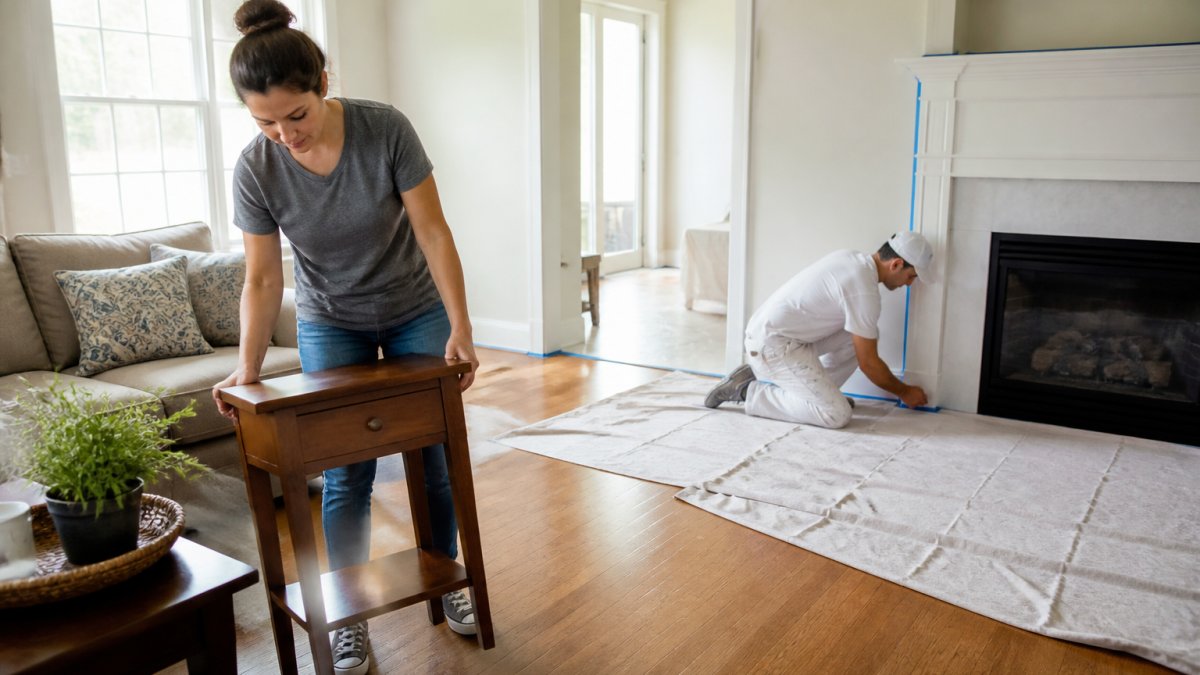
The crew should handle the rest. Drop cloths, painter's tape, and plastic sheeting go down before a single can is opened. If you see paint splatter on unprotected floors, that is a warning sign.
Do Painters Wash Walls Before Painting?
Yes, most professional painters wash walls before painting, because dirt and grease stop paint from sticking. A quick wash with a mild cleaner removes kitchen film, dust, and fingerprints. Skipping this step leads to peeling and uneven sheen.
Here is what proper wall prep looks like:
- Wash walls and let them dry fully
- Sand glossy spots so the new coat grips
- Patch nail holes and cracks with spackle
- Caulk gaps around trim and baseboards
- Prime bare drywall and repaired areas
The American Coatings Association's guidance on paint adhesion explains that surface prep is the main factor in how well a finish holds up over time. A crew that skips washing or sanding is cutting the one corner that shows up first.
What to Ask a Painting Contractor Before Work Begins
Asking the right questions before work begins protects your wallet and your timeline. Get answers in writing, not just verbally. A real contractor will not mind.
Ask these questions:
- What is the full scope of work, room by room?
- Which surfaces are included, and which are not?
- What brand and sheen of paint will you use?
- How many finish coats are included?
- What is the deposit, and when is the balance due?
- Who handles drywall repair and caulking?
- What does the warranty cover, and for how long?
Get the answers in a written estimate. A clear scope of work prevents surprise costs later. For homeowners worried about hidden problems under old floors or walls, ask how the contractor handles unexpected damage. A good crew documents it and gives you a written change order before doing extra work.
Painting Project Final Walkthrough Checklist
The final walkthrough is your chance to catch problems before you pay the balance. Do it in daylight, with the lights on, and take your time.
Use this checklist:
- Check every wall for uniformity and missed spots
- Look for paint on trim, floors, and outlets
- Confirm caulking lines are smooth and even
- Test doors and windows for smooth opening
- Review the punch list of touch-ups with the crew
- Confirm debris removal and cleanup are complete
- Get the warranty terms in writing
- Hold final payment until the punch list is done
Walk each room slowly. Run your hand along trim edges. If something looks off, say so now, not after the crew packs up.
Timeline, Communication, and Site Etiquette
Most interior painting jobs take a few days to a couple of weeks, depending on square footage, prep work, and dry time. A single room is often a one- or two-day job. A whole house takes longer, especially with drywall repair and multiple finish coats.
A realistic schedule usually follows this shape:
- Day 1: protection, masking, and surface prep
- Day 2: priming and first finish coat
- Day 3: second finish coat and detail work
- Day 4: touch-ups, cleanup, and walkthrough
Larger homes, heavy drywall repair, or cabinet painting stretch that timeline. Cabinet painting in particular can run several days because doors and drawers are removed, sprayed, and cured off-site or in a controlled area.
Communication Expectations
Communication should be simple and steady. A well-run crew sets these expectations before the first day:
- A named point of contact, usually the lead painter or project manager, who answers questions
- A daily check-in on progress and next steps, even a short text
- Advance notice if the schedule shifts because of weather, dry time, or a supply delay
- A plan for pets, kids, and parking before work begins
- A set start and end time each day so you can plan around noise and fumes
Digital Documentation
A modern expectation that older guides miss: ask whether the crew documents progress with photos. Many contractors now text daily photos of prep, priming, and finish coats, and some use electronic sign-offs for change orders and the final punch list. This creates a shared record if a dispute arises later. If your contractor does not offer it, ask for it, a quick photo log costs nothing and protects both sides.
Site Etiquette
The crew should keep the work area tidy, cover furniture daily, and remove debris as they go. Floors and stair treads should stay protected for the whole job, not just on paint days. If a crew leaves paint splatter, trash, or uncovered furniture behind, that is a sign of sloppy workmanship that usually shows up in the finish too.
When Something Goes Wrong
Disagreements happen, and how they are handled matters more than whether they occur. A professional crew has a process:
- Raise the issue in writing, email or text, while the job is still active
- Reference the written scope of work and the punch list
- Give the contractor a reasonable window to correct the issue before withholding payment
- If the contractor is licensed, check whether your state or local licensing board offers a complaint process
- For larger disputes, small claims court or a mediation clause in the contract may apply
Most problems are resolved at the punch-list stage if they are documented early. Waiting until after final payment removes most of your leverage.
Common Mistakes Homeowners Make With Professional Painters
The biggest mistake homeowners make is choosing on price alone. The cheapest bid often skips prep, uses thin coats, or rushes the finish. That shows up as peeling, uneven sheen, and callbacks. But the mistakes that cost the most are usually the ones made after the crew leaves.
Mistakes Before and During the Job
- Paying a large deposit upfront with no written scope
- Skipping the walkthrough and paying in full
- Ignoring color matching on touch-ups
- Assuming the crew will move heavy furniture for free
- Not keeping a record of the paint brand, sheen, and color codes
- Letting the crew start before you have agreed on a punch-list process
Keep a simple record of what was used. Write the brand, product line, sheen, and color code on a piece of painter's tape and stick it inside a closet door or on the back of a switch plate. It makes future touch-ups and color matching far easier.
Mistake Most Guides Skip: Ignoring Post-Project Care
Most painting guides stop at the final walkthrough. That is where the real long-term value begins. Fresh paint is not fully cured for days to weeks, depending on the product. During that window:
- Avoid washing walls with anything abrasive
- Wait before hanging pictures or shelves so the paint has time to harden
- Use a damp microfiber cloth for dust, not a wet sponge
- Touch up scuffs with the same sheen and product, not a random can from the garage
- Keep a small labeled jar of leftover paint stored indoors, away from freezing temperatures
A simple maintenance routine, dusting every few weeks and spot-cleaning with mild soap, keeps the finish looking new far longer than any single product can.
Mistake Most Guides Skip: Overlooking Safety and Environmental Standards
Paint fumes, dust from sanding, and VOCs are real concerns, especially with pets, children, or anyone with asthma in the home. Before work begins:
- Ask what VOC level the products carry and whether low- or zero-VOC options are available
- Confirm the crew will ventilate, open windows, fans, or both, during and after application
- Plan to keep pets and kids out of the work zone, and ideally out of the house on spray days
- Ask how the crew will contain sanding dust, since fine dust travels through HVAC systems
- Confirm cleanup of any lead-based paint concerns if the home was built before 1978, which triggers specific federal disclosure and handling requirements
These are not upsells. They are the difference between a job that looks good on day one and one that is safe to live in while it cures.
Conclusion: Getting the Most From Your Painting Project
A smooth painting project comes down to clear expectations, written scope, and a crew that treats prep as the main event. When you know what to expect from professional painters, you can spot a rushed job before it costs you.
At Hardwood Floor Refinishing & Restoration, we bring the same care to interior painting that we bring to hardwood floor refinishing, including free in-home estimates, careful prep, dependable scheduling, and clean job sites. If your project also involves worn or scratched floors, we can refinish, stain, or repair them alongside the paint work. Get your free estimate.
Frequently Asked Questions
Do professional painters wash the walls before painting?
Yes, most professional painters wash walls before painting, especially in kitchens, bathrooms, and high-traffic areas where grease, dust, or grime can prevent paint from adhering properly. They typically use a mild detergent solution and rinse thoroughly, then allow walls to dry completely before applying primer or paint. Skipping this step can lead to peeling, uneven sheen, and premature failure of the finish.
How should I prepare my home for painters?
Remove small valuables, wall hangings, and fragile items from rooms being painted. Clear furniture away from walls or move it to the center of the room. Take down curtains and blinds, and store them elsewhere. If pets or children are present, arrange for them to stay elsewhere during work hours. Professional painters will handle drop cloths, painter's tape, and masking, but your preparation makes the project safer and faster.
What questions should I ask a painting contractor before hiring?
Ask for a detailed scope of work including surface preparation, sanding, priming, caulking, and the number of finish coats. Request a written estimate with a payment schedule and deposit amount. Inquire about insurance, licensing, and whether they use subcontractors. Ask for local references you can call and confirm the expected project timeline. Also clarify who handles drywall repair, cleanup, and debris removal, and what warranty covers workmanship.
What does a painting project final walkthrough checklist include?
A final walkthrough checklist covers paint uniformity, sheen consistency, and coverage on all surfaces. Check for paint splatter on floors, trim, and fixtures. Inspect caulking lines, cut-in edges, and touch-ups. Confirm that all outlet covers and hardware are reinstalled. Review the punch list of any missed spots or defects, and agree on a completion date. Get a written warranty and care instructions before final payment.