 blog
7 Best Hardwood Flooring Options for Older Homes
Last Updated: October 25, 2026
Quick Summary
The best hardwood flooring for older homes is solid or engineered oak that matches the existing subfloor, original trim, and how the rooms are used. Red oak is the best species for most older homes, and refinishing original boards is almost always cheaper and faster than replacement.
- Solid hardwood suits older homes with wood subfloors and long-term owners; engineered handles moisture better.
- Red oak rates around 1,290 on the Janka scale and is the period-correct default for pre-war houses.
- Pull a board from a closet or under a radiator to identify species before you buy.
- Skipping subfloor prep is the most common cause of new floors that creak, cup, or fail.
- Keep indoor humidity between 35% and 55% to limit seasonal movement.
Table of Contents
- What Makes Hardwood Flooring Right for an Older Home
- Solid vs Engineered Hardwood Flooring: Which Suits an Older House
- The Best Wood Species for Hardwood Floors in Older Homes
- Hardwood Flooring for Uneven Floors: Prep and Installation
- Refinishing Old Hardwood Floors Instead of Replacing Them
- Matching New Hardwood Flooring to Original Floors and Historic Details
- Durability, Maintenance, and Comfort in High-Traffic Older Homes
- Choosing Your Hardwood Flooring Plan for an Older Home
- Frequently Asked Questions
What Makes Hardwood Flooring Right for an Older Home
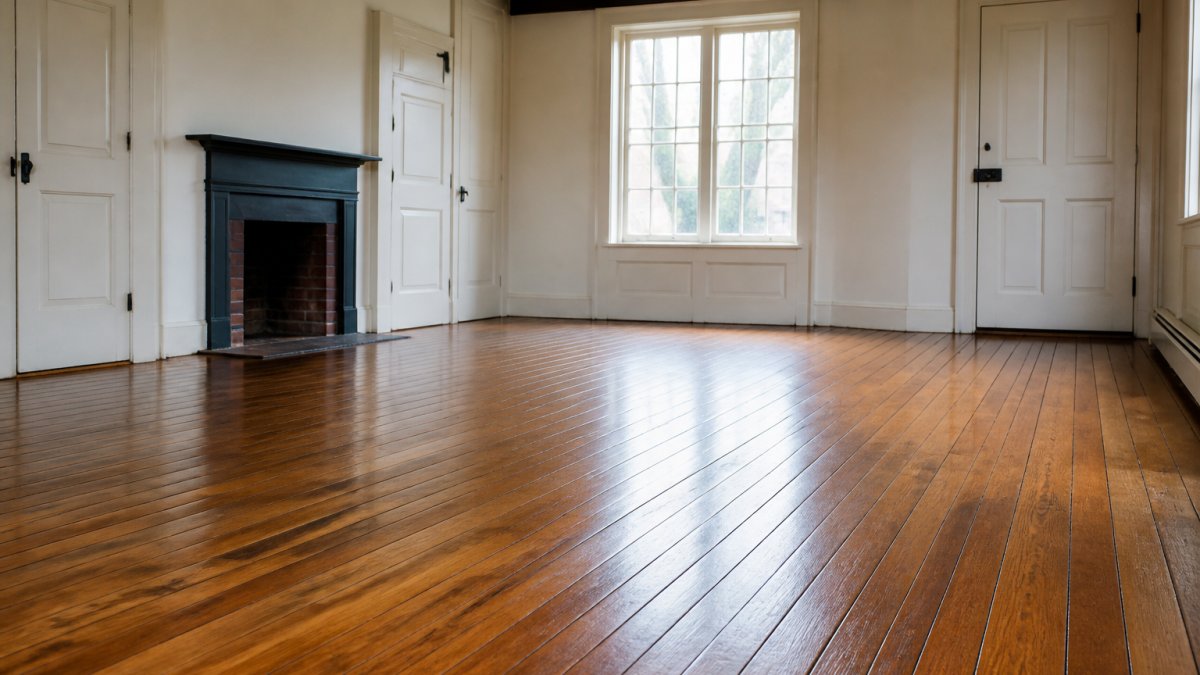
The best hardwood flooring for older homes is a solid or engineered oak floor that matches the existing subfloor, the home's original trim, and the way the rooms are actually used. At Hardwood Floor Refinishing & Restoration, we have restored floors in older and historic homes across the North Shore since 2012, and the pattern is consistent: the floor that lasts is the one chosen for the house in front of you, not the one that looks best in a showroom.
Older homes come with quirks that new construction never has. Sloping floors, patched subfloors, settled joists, and original trim that sits tight to the boards all narrow your options. Hardwood is still the right call for most of these houses because it can be sanded, patched, and refinished rather than torn out and replaced.
- Repairable: Individual boards can be swapped instead of replacing the whole floor.
- Refinishable: Worn surfaces can be sanded back and refinished.
- Period-correct: Oak, pine, and maple match the look of most pre-war houses.
- Durable: A maintained hardwood floor handles decades of foot traffic.
That repairability is the real argument. A floor you can fix in sections will outlast one you have to rip out.
Solid vs Engineered Hardwood Flooring: Which Suits an Older House
Solid hardwood is one piece of wood milled from a single board. Engineered hardwood is a real wood top layer bonded to a plywood core. For older homes, solid is usually the better match, but engineered has a place.
Solid flooring can be sanded and refinished many times over its life, which matters in a house you plan to keep. It also moves with seasonal humidity, and older homes tend to swing more than newer ones. That movement is manageable with proper acclimation and expansion gaps.
Engineered flooring handles moisture swings better and works well over concrete or in basements. The catch is the wear layer: a thin top layer limits how many times the floor can be refinished before it needs replacing.
| Feature | Solid Hardwood | Engineered Hardwood |
|---|---|---|
| Construction | Single piece of wood | Wood top layer on plywood core |
| Refinishing | Multiple times over its life | Limited by wear layer thickness |
| Moisture tolerance | Lower, moves with humidity | Higher, more stable |
| Best for | Older homes with wood subfloors | Basements, concrete, moisture-prone rooms |
| Repair | Individual boards replaceable | Board replacement is trickier |
Best for: Solid hardwood suits older homes with wood subfloors and long-term owners. Skip if: the room sits over concrete or has a moisture problem, where engineered is the safer pick.
The Best Wood Species for Hardwood Floors in Older Homes
Red oak is the best wood species for most older homes. It is what most pre-war American houses already have under the carpet, it takes stain predictably, and it holds up to wear. White oak runs a close second with a tighter grain and slightly better moisture resistance.
Species choice comes down to hardness, grain, and how the wood accepts finish. Harder woods resist dents; softer woods dent and scratch more easily but can be sanded smooth again.
- Red oak: The period-correct default. Warm tone, open grain, takes stain well. Janka ~1,290.
- White oak: Tighter grain, more water-resistant, slightly harder. Janka ~1,360.
- Hickory: The hardest common choice. Great for high-traffic areas, but busy grain can fight with historic trim. Janka ~1,820.
- Maple: Smooth, fine grain. Common in older kitchens, but hard to stain evenly and shows scratches. Janka ~1,450.
- Cherry: Softer and warmer. Beautiful, but dents more easily in busy rooms. Janka ~950.
A common mistake is choosing a species for looks alone and ignoring how the room gets used. Hickory in a formal living room is overkill. Maple in a busy kitchen entryway will show every dropped pan.
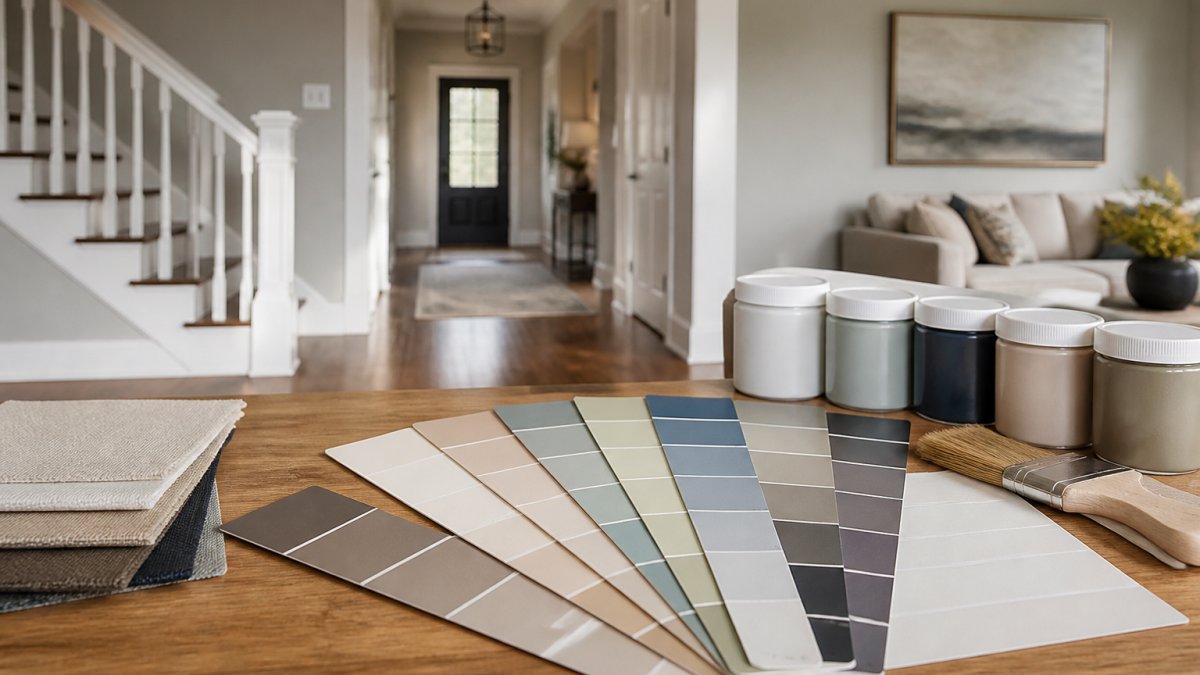
Finish choice matters as much as species. Oil-based polyurethane adds a warm amber tone that suits pre-war homes, while water-based finishes stay clear and can look too pale against original trim. A satin or matte sheen reads more period-correct than a high-gloss finish, which tends to look modern and shows dust.
Hardwood Flooring for Uneven Floors: Prep and Installation
Hardwood flooring for uneven floors starts with the subfloor, not the boards. Sloping or uneven floors in older homes need to be assessed and prepped before any new flooring goes down. Installing over a bad subfloor just transfers the problem to the new surface.
Start by checking for movement, soft spots, and moisture. A floor that bounces or feels spongy usually points to joist or subfloor problems underneath. Fix those first.
- Walk the floor and mark every soft or bouncy spot.
- Check for moisture with a meter before installing.
- Inspect for damaged or rotted subfloor panels.
- Confirm joists are solid and level.
- Address squeaks before the new floor covers them.
Before you install over uneven floors, it's worth reading up on the signs of subfloor damage so you know what to look for. Getting the installation details right also prevents squeaks down the road, and our guide to preventing squeaky hardwood floors covers the specifics.
Watch out: skipping subfloor prep to save time is the single most common cause of a new floor that creaks, cups, or fails within a few seasons.
Refinishing Old Hardwood Floors Instead of Replacing Them
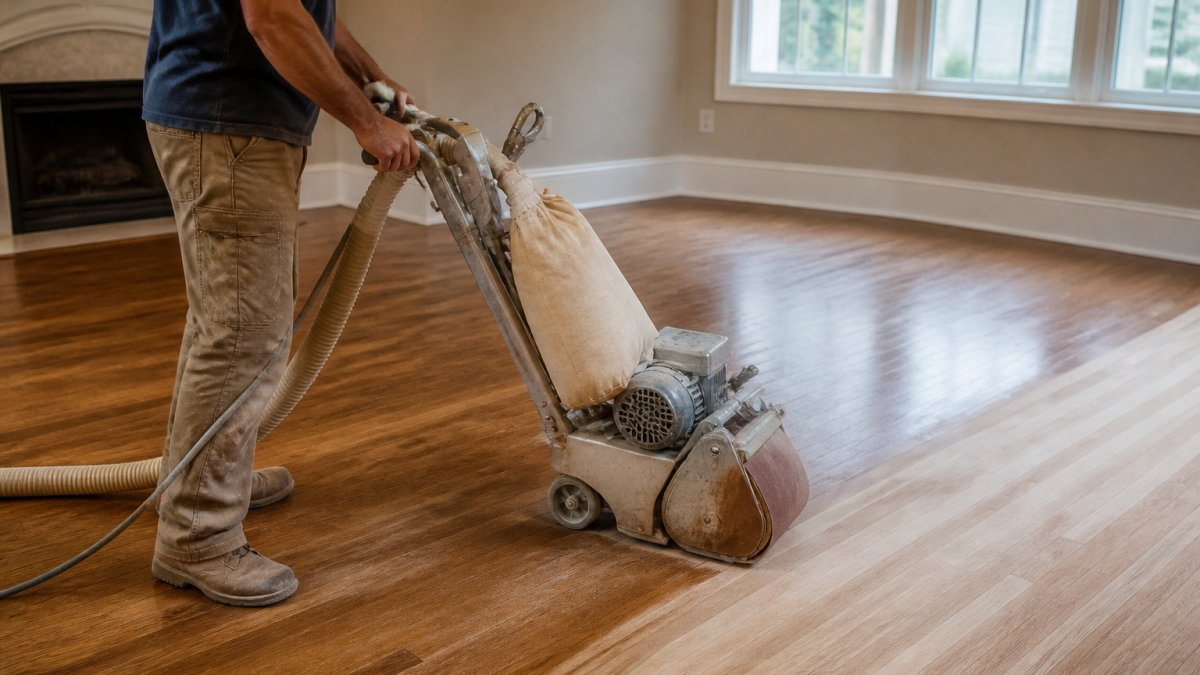
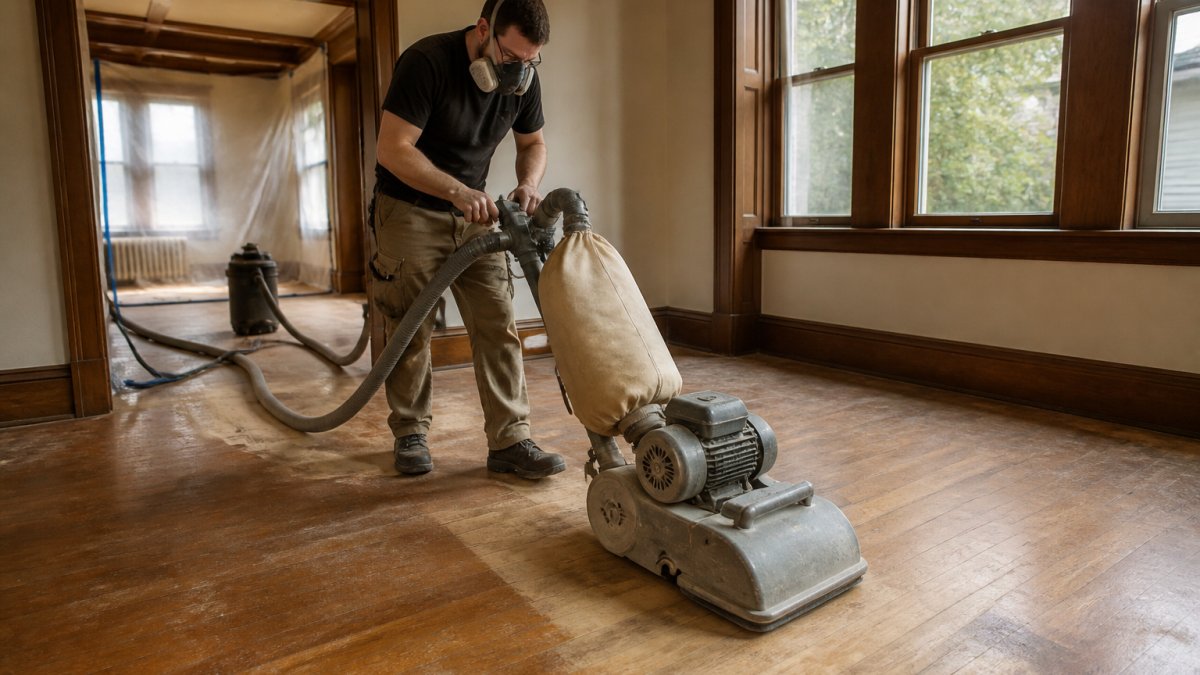
Refinishing old hardwood floors is almost always cheaper and faster than replacement, and it preserves the original wood that gives an older home its character. If the boards are structurally sound, sanding and refinishing brings them back to life.
Replacement only makes sense when boards are rotted, badly damaged, or too thin to sand again. Most worn, scratched, or dull floors just need a refinish.
Signs your floor is a refinishing candidate:
- Surface scratches and dull finish
- Stains that sit in the finish, not deep in the wood
- Worn traffic paths but solid boards
- Original boards still tight and flat
If you're weighing the two options, our guide to the signs your hardwood floor needs refinishing walks through the warning signs in detail.
Matching New Hardwood Flooring to Original Floors and Historic Details
Matching new flooring to original floors comes down to species, board width, and finish. Get those three right and a patch blends in; get them wrong and the repair looks like a scar.
Older homes often have narrow boards, warm-toned finishes, and specific trim profiles. Pull a board from a closet or under a radiator to identify the species and match it. A flooring pro can also match the finish sheen and color to the surrounding floor rather than the whole room.
- Match species first, then board width, then finish.
- Keep original trim and baseboards intact where possible.
- Use a test patch to confirm the color match before committing.
- Preserve original details rather than covering them.
What most guides miss is that a perfect color match isn't always the goal. In a historic home, blending a repair so it reads as part of the floor's history often looks better than a spotless patch that stands out.
Durability, Maintenance, and Comfort in High-Traffic Older Homes
Durability in an older home comes down to finish choice, species hardness, and simple maintenance.
For high-traffic areas, a harder finish and a harder species both help. Aluminum oxide finishes resist wear better than traditional lacquer, and a Janka rating above 1,300 gives you a margin against dents.
- Sweep or vacuum high-traffic rooms regularly to remove grit.
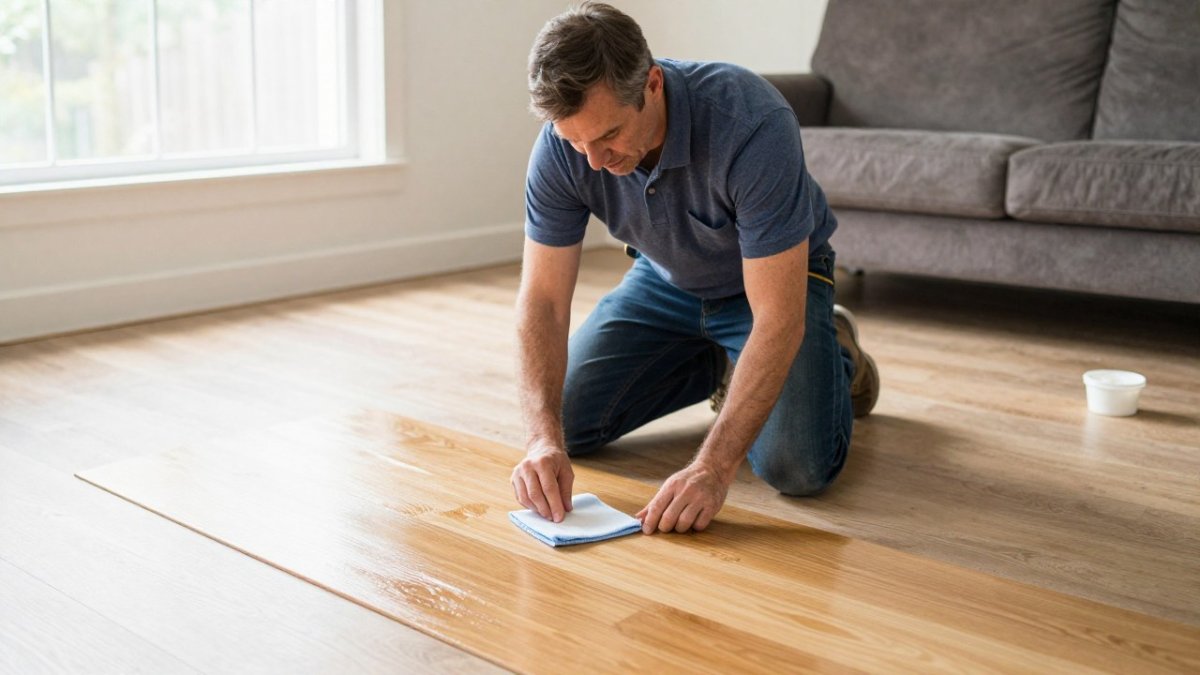
- Wipe spills quickly to prevent stains and warping.
- Use felt pads under furniture legs.
- Keep indoor humidity between 35% and 55% to limit seasonal movement.
- Recoat the finish before wear reaches the wood.
Cleaning is simple: a broom, a vacuum, and a damp mop with a floor-safe cleaner. No harsh chemicals, no soaking. That routine keeps dirt and allergens off the floor and protects the finish.
What most guides miss is that durability and accessibility are linked in older homes. Hardwood is a low-pile surface that is easy to move across, but transitions between rooms, thresholds at doorways, and area rugs can become trip hazards.
Long-term ownership also means planning for refinishing. A solid hardwood floor can be sanded and refinished multiple times over its life, while an engineered floor is limited by its wear layer.
Choosing Your Hardwood Flooring Plan for an Older Home
The right plan for an older home starts with an honest assessment of what you have. Species, subfloor condition, and finish all feed into the decision, and getting a professional opinion early saves money later.
At Hardwood Floor Refinishing & Restoration, we start every project with a free in-home estimate so you know what you're working with before anything is decided. That means checking the subfloor, identifying the species, and confirming whether refinishing or replacement makes sense. Our team has worked on older and historic homes across the North Shore since 2012, and we handle sanding, custom staining, floor repairs, damaged board replacement, buff and recoat, and durable oil-based and water-based finishes.
If you're ready to move forward, our guide to hiring professional floor contractors covers what to ask before you sign. When you're set, you can review our hardwood flooring services and request a free in-home estimate.
Frequently Asked Questions
Is solid or engineered hardwood better for an older house?
It depends on your subfloor and moisture conditions. Solid hardwood can be sanded and refinished multiple times over decades, which suits older homes with original floors worth preserving. Engineered hardwood handles slight humidity swings and can go over concrete or radiant heat, but its wear layer limits how often it can be refinished. In most older homes with a sound wood subfloor, solid hardwood is the more traditional and longer-lasting choice.
Can old hardwood floors be refinished instead of replaced?
Often yes. If the boards are structurally sound and have enough thickness above the tongue, refinishing old hardwood floors restores the surface without the cost and waste of replacement. A contractor will check for cupping, gaps, pet stains, and how much wear layer remains. Refinishing also lets you change the stain color while keeping the original wood, which preserves the character of an older home.
Can hardwood flooring be installed over uneven floors?
Hardwood flooring for uneven floors usually requires prep first. Minor slopes and dips can be leveled with plywood underlayment or a self-leveling compound; serious structural sagging should be repaired before any flooring goes down. Skipping prep leads to squeaks, gaps, and premature wear. An in-home assessment tells you whether the subfloor needs leveling, repair, or replacement before installation.
Which wood species is most durable for hardwood floors?
Hickory and white oak rank among the most durable domestic species, with high hardness ratings that resist dents in busy households. Red oak is slightly softer but remains a strong, widely available option that matches many original floors in older homes. Cherry is softer and better suited to low-traffic rooms. The finish you choose also affects wear resistance, so pair the species with a quality oil-based or water-based finish.
Older homes reward the homeowner who plans before the first board comes up. If your floors are worn, uneven, or hiding under old carpet, get a professional assessment before you commit to a direction. Get started with Hardwood Floor Refinishing & Restoration and request a free in-home estimate so you can choose the right floor for your house with confidence.